
How to Search New Haven County Court Records
The main starting point is the Connecticut Judicial Branch Case Look-up hub. It separates Supreme and Appellate Court matters from Superior Court civil, family, housing, small claims, criminal, and motor vehicle records. For New Haven County court records, the key is not a county database. The searcher must choose the right statewide system and then use the New Haven location code, court venue, party name, or docket number that matches the case.
For civil, family, housing, and small claims files, use the Superior Court Civil/Family/Housing/Small Claims case lookup. For criminal and motor vehicle cases, use the Judicial Branch criminal/motor vehicle pending and conviction tools. Probate files are searched through the Connecticut Probate Court system, and federal cases from New Haven use PACER or the District of Connecticut CM/ECF path. A practical search starts with names and likely court type, then moves to docket number once a result is found.
- Open the Judicial Branch case lookup hub and pick the case family: civil/family/housing/small claims or criminal/motor vehicle.
- For civil and family records, search by party name first, then narrow by location such as NNH for New Haven Judicial District, AAN for Milford Judicial District, NHH for New Haven Housing, or 644 for New Haven UIFSA.
- For criminal or motor vehicle records, search by defendant name or docket number and use court codes such as N23N, N07M, or NNH when known.
- Open the matching case and compare the docket number, party names, case type, events, and disposition against the facts you already have.
- If the public view is incomplete, contact the Chief Clerk at the courthouse where the case was filed and ask what copy or inspection process applies.
The Judicial Branch hub is shown in the official source image below. That hub matters because New Haven County court records do not sit in one county clerk database.
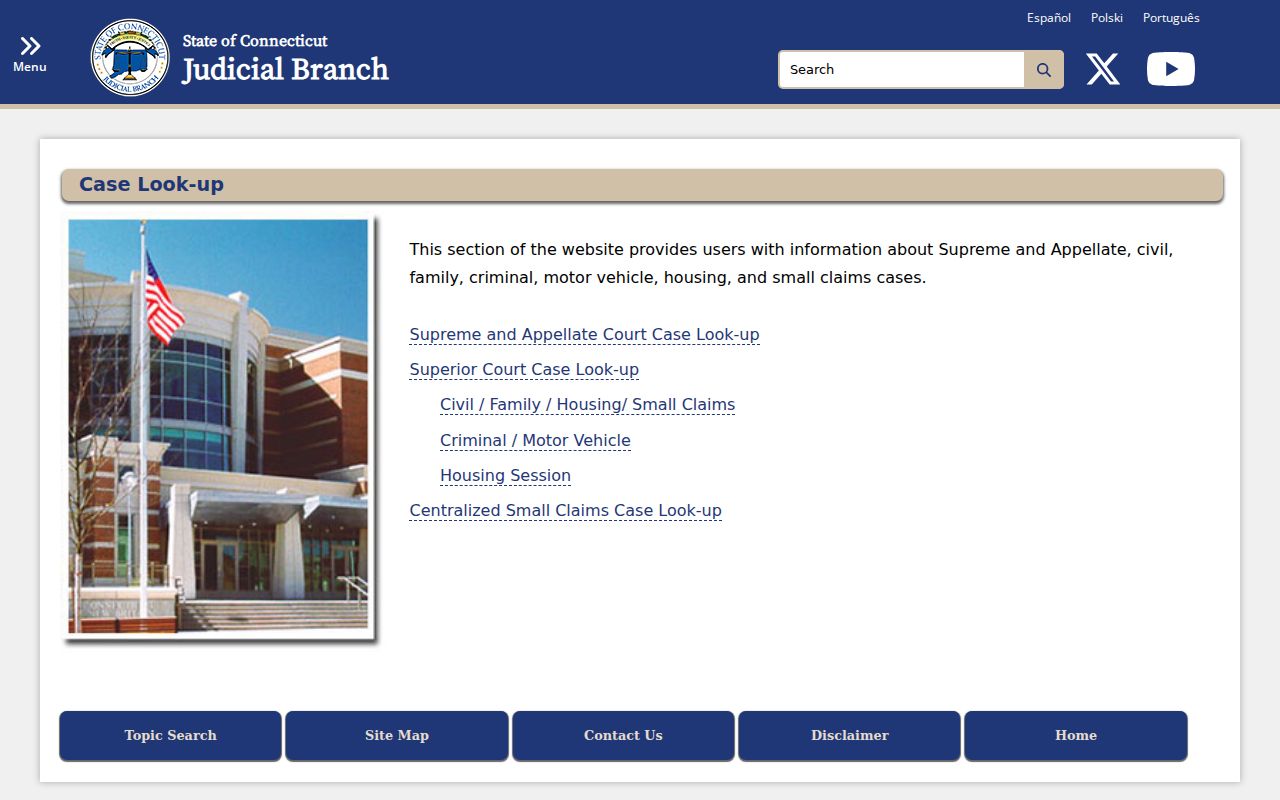
Use the hub as a routing page: civil and family cases go one way, criminal and motor vehicle records go another, and appellate or federal matters use different systems.
New Haven County Court Records Search Fields
The civil and family party-name search is often the best first search for New Haven County court records when the docket number is not known. It accepts a last name, optional first name, court location, case category, and case type. The location dropdown is useful because Connecticut location codes point to real venues, such as NNH for New Haven Judicial District, AAN for Milford Judicial District, NHH for New Haven Housing, and other statewide courts.
| Field Label | Type | Required | Notes / Format |
|---|---|---|---|
| Party Last Name | Text | Yes | Required field with a 54-character limit. |
| Party First Name | Text | No | Optional first-name field with a 50-character limit. |
| Location | Dropdown | No | Use NNH for New Haven JD, AAN for Milford JD, NHH for New Haven Housing, or 644 for New Haven UIFSA when relevant. |
| Case Category | Dropdown | No | All, CV, or FA. |
| Case Type | Dropdown | No | Examples include dissolution, custody, civil protection, foreclosure, small claims, housing, and probate appeals. |
The manifest image for the Civil/Family/Housing/Small Claims Party Search shows the form used for many New Haven County court records.
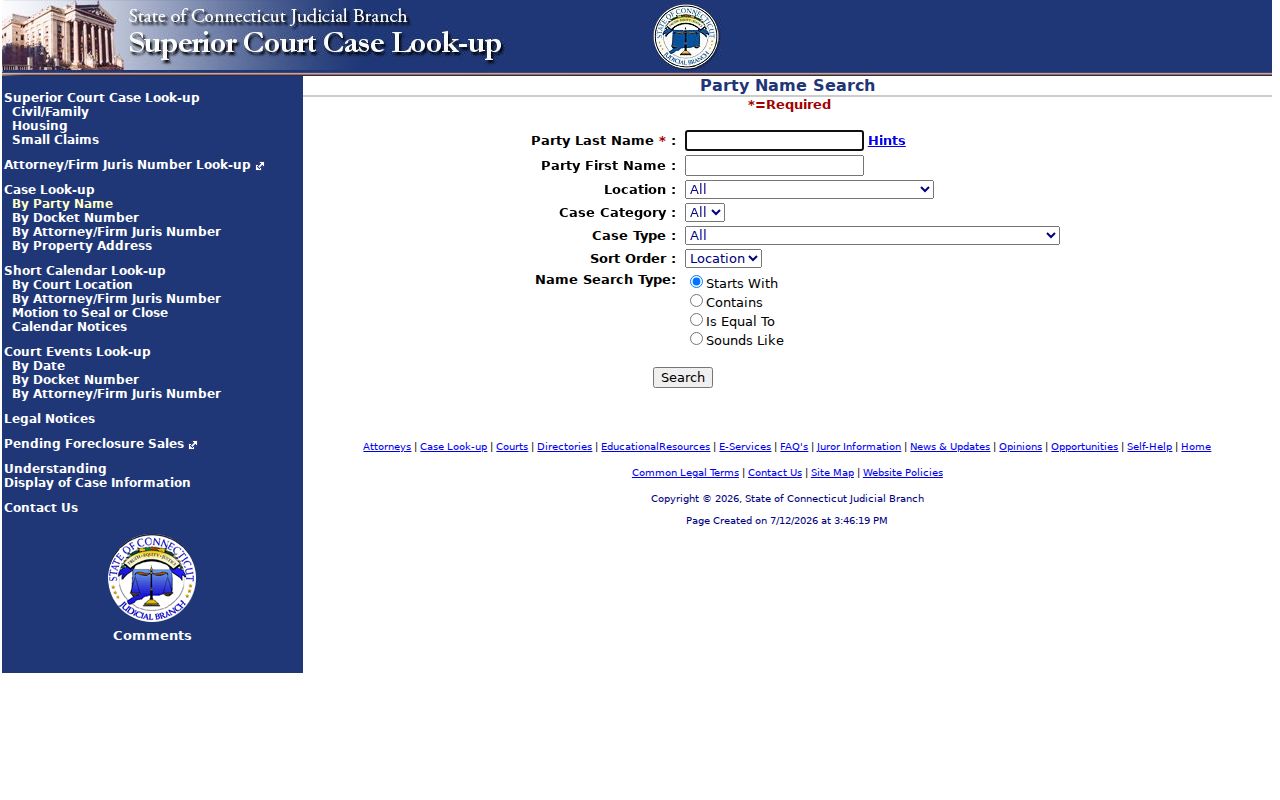
The field set explains why a broad name search can produce too many matches. Location and case category filters make the search more useful for local records.
Types of New Haven County Court Records
Connecticut uses a statewide Superior Court rather than county trial courts. New Haven County court records therefore come from the New Haven Judicial District, Geographical Area courts, Housing Session, Probate Court districts, and federal courts when the matter is not a state case. Civil records may include complaints, appearances, motions, pleadings, judgments, foreclosures, collections, contracts, torts, agency appeals, housing matters, and small claims transfers. Family records include divorce, legal separation, annulment, custody, parentage, support, visitation, civil union dissolution, and relief from physical abuse.
Criminal records are handled in a different lookup path. They can show charges, docket numbers, arraignments, pleas, hearings, dispositions, sentencing, probation orders, and conviction entries. Court charge records are narrower than the full criminal case file, while traffic and motor vehicle records may appear in the criminal/motor vehicle lookup when the citation becomes a court matter. Probate, marriage, divorce, and federal case records follow separate custody rules and search systems.
- Civil and family Superior Court records are searched through the civil/family lookup with New Haven location codes.
- Criminal and motor vehicle case records are searched through the criminal/motor vehicle pending and conviction tools.
- Probate records are handled by Connecticut Probate Courts, not by the Superior Court case lookup.
- Federal district, bankruptcy, and appellate records use federal court systems, including PACER.
What New Haven County Court Records Show
A New Haven County court record usually identifies the court location, docket number, parties, case category, filing or event dates, and current status. Civil and family docket numbers use a location code plus category, year, and sequence. Criminal and motor vehicle docket numbers use a court code, case type, year, number, and suffix. The record may also show motions, pleadings, documents, charges, disposition, judgment, sentence, costs, fines, fees, bonds, or restitution depending on the court and record type.
| Field | What It Shows |
|---|---|
| Docket number | Location code, category or case type, two-digit year, sequence number, and sometimes a suffix. |
| Court location | NNH New Haven JD, N23N New Haven GA23, N07M Meriden GA7, NHH/XNH New Haven Housing, AAN Milford JD, or 644 New Haven UIFSA. |
| Parties or defendant | Names and roles that are public in the selected case type. |
| Case category | CV, FA, CR, MV, CI, MI, housing, small claims, or probate-related category. |
| Events and documents | Hearings, docket events, motions, pleadings, and document entries when available. |
| Disposition | Dismissed, nolled, conviction, sentence, judgment, or another result where public. |
| Redactions | Social Security numbers, financial account data, minor names, protected addresses, sealed filings, and erased material may be hidden. |
Connecticut also has special erasure rules. The cannabis possession erasure statute is one example of why a past record may no longer appear in a public search.
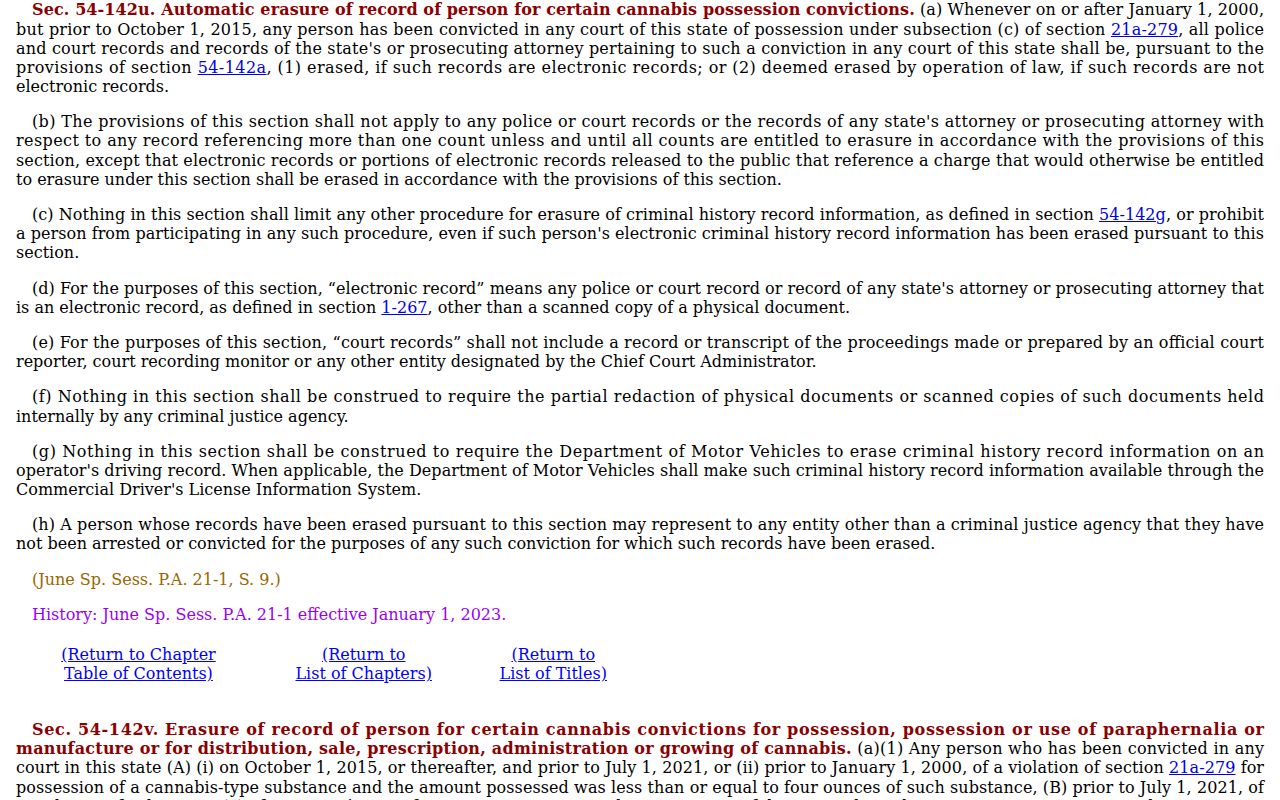
When a record has been erased, the public lookup may not show the prior case even if older private notes or archived references still mention it.
Public Access for New Haven County Court Records
Connecticut public access starts with broad agency-record principles, but court case access is more specific than a normal municipal records request. CGS 1-200 defines public records or files and includes judicial offices only for administrative functions. CGS 1-210 provides the general right to inspect or copy public records unless another law restricts access. CGS 1-212 supplies copy and scanning fee rules for public records.
For case files, the practical channel is the Judicial Branch public lookup first, then the Chief Clerk for the courthouse that holds the case. For police arrest information during a pending prosecution, CGS 1-215 is important. For criminal history, CGS 54-142k makes conviction information public for any purpose but limits nonconviction information mainly to the subject and the subject's attorney.
Note: Online court records are not the same as certified copies from the clerk's office.
Restricted New Haven County Court Records
Not every New Haven County court record is public. Juvenile matters are confidential under CGS 46b-124, with access limited to listed people and agencies or by court order. Youthful offender cases are not shown in the Judicial Branch criminal lookup. Sealed family, probate, and protective-order materials may be withheld to protect minors, victims, addresses, financial data, medical data, or other sensitive facts.
Criminal erasure is also a major limit. CGS 54-142a governs erasure after not guilty findings, dismissals, nolles, pardons, and eligible convictions. Once erased, the record is generally not disclosed unless a statute allows it. Connecticut also has automated erasure rules under CGS 54-142t. A person seeking access to sealed or erased material normally must use the court process that applies to that case rather than a public search screen.
New Haven County Court Record Requests
When the public lookup does not show enough information, contact the Chief Clerk at the courthouse that owns the file. The New Haven Judicial District courthouse handles civil, family, serious criminal, and related Superior Court records. GA23 and GA7 handle many criminal and motor vehicle matters. Bring or provide the docket number if known, party names, case type, approximate filing year, and the reason a certified copy is needed. Fax numbers are published, but copy procedures should be confirmed by phone before sending a request.
New Haven Judicial District Chief Clerk's Office
235 Church Street
New Haven, CT 06510
203-503-6800
Public hours 9:00 a.m.-5:00 p.m.; doors open 8:30 a.m.
Geographical Area 23 at New Haven
121 Elm Street
New Haven, CT 06510
203-789-7461
Criminal and motor vehicle matters; Bail Services 203-789-7482.
Geographical Area 7 at Meriden
54 West Main Street
Meriden, CT 06451
203-238-6130
Criminal and motor vehicle matters; Bail Services 203-238-6140.
Federal New Haven records use separate federal systems. The District of Connecticut explains its CM/ECF and PACER case-information process, and PACER is the national public access portal for federal dockets.
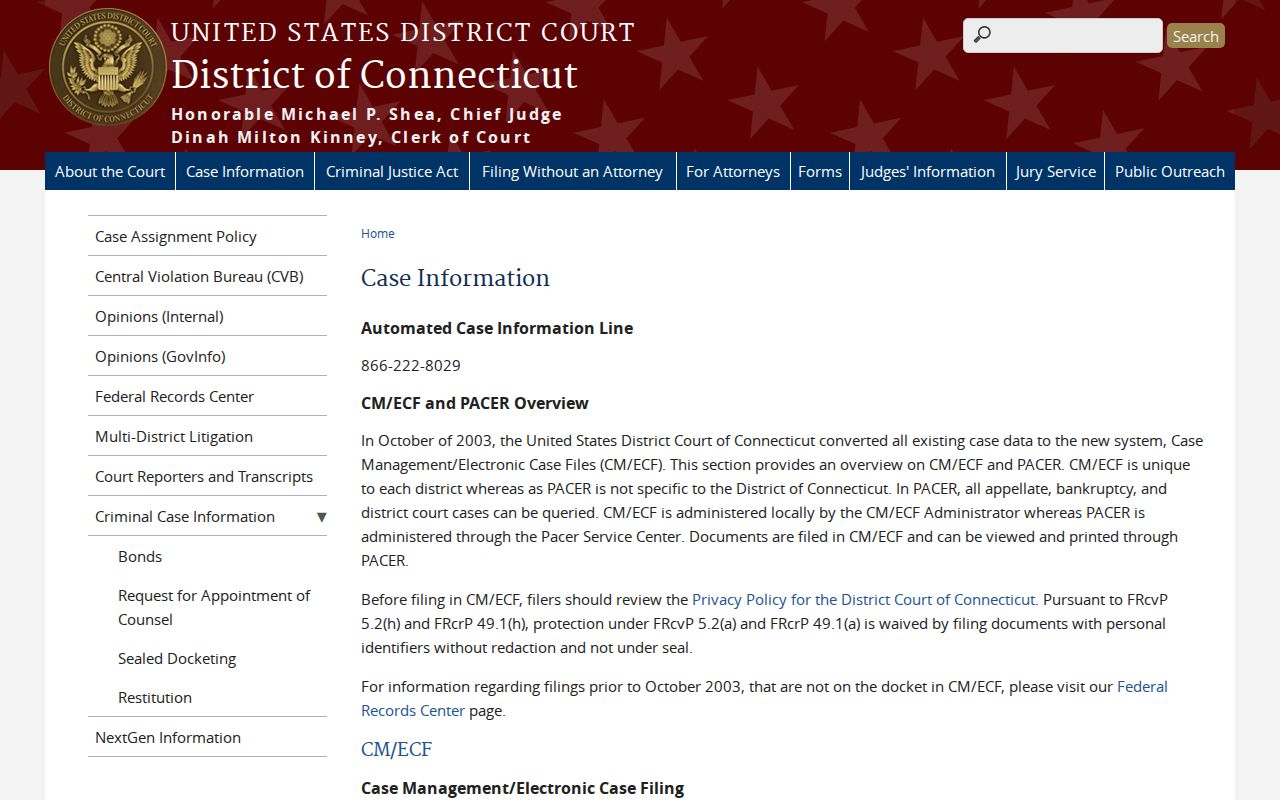
Federal records should not be mixed with state Superior Court records. A New Haven address can still point to a different court system and a different clerk.
The official PACER public access portal is also assigned to New Haven County court records in the image manifest.
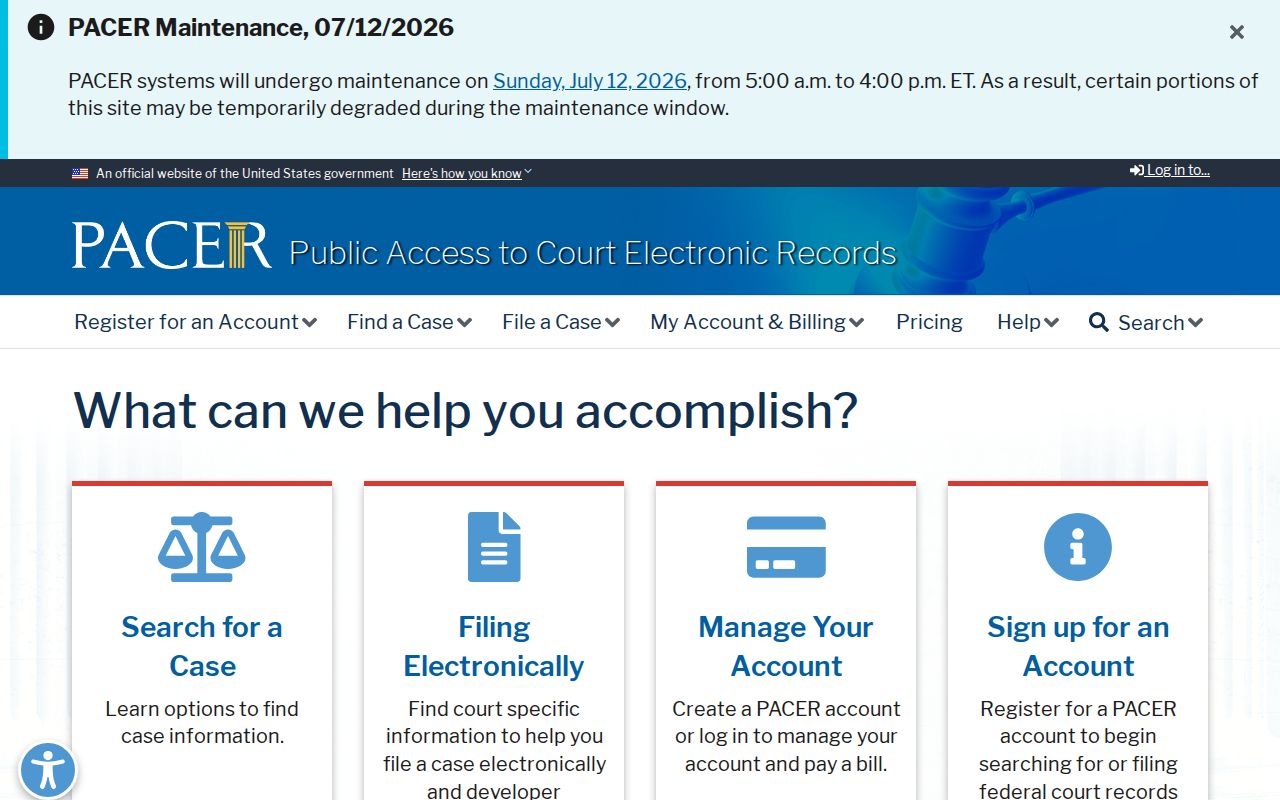
PACER is useful for federal district, bankruptcy, and appellate searches, but it does not replace Connecticut Judicial Branch lookup tools for Superior Court cases.